
Discover the power and stability of a spring puller for trampolines
Discover the power and stability of a trampoline spring tensioner. Are you looking for a safe and reliable way to tension your trampoline? A spring tensioner may be the perfect solution for you. With a spring tensioner, you can get the most out of your trampoline's bounce while ensuring a firm and stable foundation. With Happygetfit spring tensioners, you can count on high quality and durability. Our spring tensioners are specially designed to fit different sizes and models of trampolines with ease. Whether you're a professional trampoline athlete or just want to have fun in the backyard, our spring tensioners will meet all your needs. The unique design of our spring tensioners distributes tension evenly across the entire trampoline, minimizing the risk of wear and damage. In addition, our spring tensioners are easy to install and adjust, so you can quickly and effortlessly enjoy the ultimate jumping fun. Discover the power and stability of a trampoline spring tensioner for yourself and take your jumping experience to the next level. Visit our website for more information and to order your spring tensioner today.
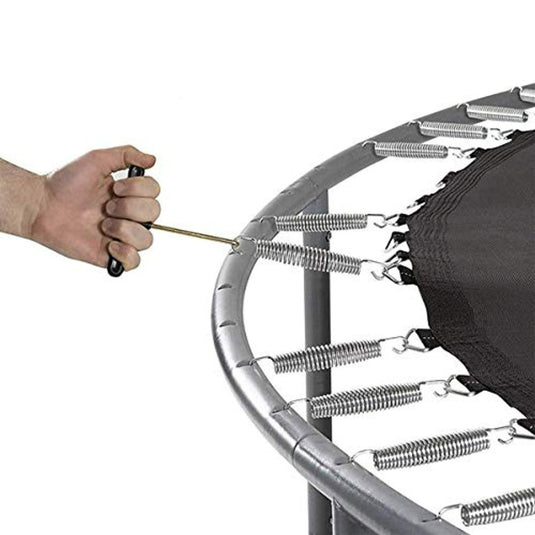
Introduction to trampoline spring tensioners
Trampolines are a great way to have fun and exercise. However, they can also be dangerous if they are not installed or maintained properly. One of the most important factors for a safe and reliable trampoline is the tension of its springs.
Spring tensioners help evenly tension a trampoline's springs, maximizing bounce and minimizing the risk of wear and damage.
What is a spring tensioner?
A spring tensioner is a device used to tension a trampoline's springs. Spring tensioners are available in different types and sizes, depending on the size and type of trampoline.
The most common types of spring tensioners are:
Manual spring tensioners: These spring tensioners are operated by hand. They are easy to use, but can be strenuous to operate, especially on large trampolines.
Automatic spring tensioners: These spring tensioners are electrically operated. They are much easier to use than manual spring tensioners, but are also more expensive.
Why do you need a spring tensioner?
Spring tensioners are important for the following reasons:
Maximize bounce: A trampoline with properly tensioned springs provides better bounce. This makes jumping more fun and safer.
Minimize wear and damage: If a trampoline's springs are not tensioned properly, they can wear out and become damaged more quickly. This can lead to accidents.
Improve stability: A trampoline with properly tensioned springs is more stable. This reduces the risk of accidents.
How to choose the right spring puller
When choosing a spring puller, consider the following factors:
The size of your trampoline: You need a spring puller large enough to tension your trampoline's springs.
The type of trampoline: There are different types of trampolines, each with its own type of spring puller. Make sure you choose a spring puller suitable for your type of trampoline.
Your budget: Spring pullers are available at various price points. Choose a spring puller that fits your budget.
Installing a spring puller
Installing a spring puller is usually straightforward. Most spring pullers come with an instruction manual. Follow the instructions in the manual to install the spring puller correctly.
Spring puller maintenance
Spring pullers should be checked regularly to ensure they are working properly. Check the spring pullers regularly for wear or damage. If you notice a damaged spring puller, replace it immediately.
Spring pullers are essential for a safe and reliable trampoline. They help maximize bounce, minimize the risk of wear and damage, and improve stability.
How spring pullers work
Spring pullers work using a lever mechanism. The lever is connected to a spring, which provides the force to tension the spring.
The main components of a spring puller are:
The lever: The lever is the component that provides the force to tension the spring.
The spring: The spring is the component that absorbs the force.
The clamp: The clamp holds the spring in place.
A spring puller works as follows:
- The user operates the lever.
- The lever converts the force into rotational motion.
- The rotational motion is transferred to the spring.
- The spring is tensioned.
The amount of tension applied to the spring is determined by the length of the lever and the force applied by the user.
Because the lever is a lever mechanism, it amplifies the force applied by the user.
This means that a small force from the user can exert a large force on the spring.
The amount of tension applied to the spring can also be regulated by the clamp.
The clamp can be loosened to release tension from the spring or tightened to tension it.
Correct spring tension is important for a safe and reliable trampoline.
If the springs are too loose, the trampoline may be unstable.
If the springs are too tight, the trampoline may be damaged.
The correct spring tension is determined by the size and type of trampoline.
The trampoline manufacturer can provide information about the correct spring tension.
Benefits of using spring pullers
Spring pullers offer several advantages over manually tensioning trampoline springs.
- Improved bounce: Properly tensioned springs provide better bounce. This makes jumping more fun and safer.
- Reduced wear and damage: If a trampoline’s springs are not properly tensioned, they can wear out and become damaged more quickly. This can lead to accidents.
- Improved stability: A trampoline with properly tensioned springs is more stable. This reduces the risk of accidents.
- Easier installation and adjustment: Spring tensioners make it easier to install and adjust a trampoline’s springs. This can save time and effort.
- Better control over tension: Spring tensioners provide more control over spring tension than manual tensioning. This can help make the trampoline safer and more reliable.
- Longer trampoline lifespan: Spring tensioners can extend a trampoline’s lifespan by reducing wear and damage to the springs.
In general, spring tensioners offer several advantages over tensioning a trampoline’s springs by hand. They provide better bounce, reduce wear and damage, improve stability, and make it easier to install and adjust the springs.
Available types of spring tensioners
Spring tensioners are available in different types and sizes, depending on the size and type of trampoline. The most common types of spring tensioners are:
- Manual spring tensioners: These spring tensioners are operated by hand. They are easy to use, but can be strenuous to operate, especially on large trampolines.
- Automatic spring tensioners: These spring tensioners are electrically operated. They are much easier to use than manual spring tensioners, but are also more expensive.
- Hydraulic spring tensioners: These spring tensioners use hydraulics to tension the springs. They are more powerful than manual or automatic spring tensioners, but also more expensive and harder to install.
Manual spring tensioners
Manual spring tensioners are the most common type of spring tensioner. They are easy to use and relatively inexpensive. To use a manual spring tensioner, you push the lever down to tension the spring.
Automatic spring tensioners
Automatic spring tensioners are easier to use than manual spring tensioners. They are powered by a motor, allowing you to tension the springs with the push of a button. However, automatic spring tensioners are also more expensive than manual spring tensioners.
Hydraulic spring tensioners
Hydraulic spring tensioners are the most powerful type of spring tensioner. They can tension much larger springs than manual or automatic spring tensioners. However, hydraulic spring tensioners are also more expensive and harder to install than other types.
Which type of spring puller you need depends on the size and type of trampoline you have. Manual spring pullers are usually sufficient for small trampolines. Automatic or hydraulic spring pullers are recommended for large trampolines or trampolines with heavy springs.
Factors to consider when choosing a spring puller
When choosing a spring puller, there are several factors you need to consider. These factors are:
- The size of your trampoline: The size of your trampoline determines the size of the spring puller you need. Manual spring pullers are usually sufficient for small trampolines. Automatic or hydraulic spring pullers are recommended for large trampolines or trampolines with heavy springs.
- Trampoline type: The type of trampoline you have also determines what type of spring puller you need. Some trampolines require special spring pullers. Therefore, check the instructions from your trampoline's manufacturer before buying a spring puller.
- Your budget: Spring pullers are available in different price ranges. Choose a spring puller that fits your budget.
- Your personal preferences: Some people prefer manual spring pullers because they are easy to use. Others prefer automatic or hydraulic spring pullers because they are easier to use.
Here are some additional factors you can consider:
- Quality: Choose a high-quality spring puller made from durable materials.
- Warranty: Many spring pullers come with a warranty. Check the warranty terms before buying a spring puller.
- Safety: Make sure the spring puller you choose is safe to use.
By considering these factors, you can find the best spring puller for your needs.
Spring puller installation process
Installing a spring puller is usually straightforward. Most spring pullers come with an instruction manual. Follow the instructions in the manual to install the spring puller correctly.
Here are the general steps for installing a spring puller:
- Gather the necessary tools and materials. For most spring pullers, you only need a screwdriver.
- Read the manufacturer's instructions carefully. This will help you install the spring puller correctly.
- Clean and dry the trampoline. This will prevent dirt or dust from getting into the spring puller.
- Attach the spring puller to the trampoline frame. Follow the manufacturer's instructions for attaching the spring puller.
- Stretch the springs. Use the spring puller to tension the trampoline springs.
- Test the trampoline. Jump on it a few times to check that the springs are tensioned properly.
Here are some additional tips for installing a spring puller:
- Always wear safety glasses and gloves when installing a spring puller. This will protect you from injury.
- Make sure the spring puller is tightened securely. A loose spring puller can come off and cause injuries.
- If you’re not sure how to install a spring puller, ask a professional for help.
Common problems when installing spring pullers
- The spring puller does not fit the trampoline frame. Check the manufacturer’s instructions to confirm that the spring puller is compatible with your trampoline.
- The spring puller is difficult to turn. Use a longer screwdriver to apply more force.
- The springs are not tensioned properly. Use the spring puller to tension them further.
By following these tips and instructions, you can install your trampoline’s spring puller safely and correctly.
Maintaining and caring for spring pullers
Spring pullers are an important part of a trampoline. They help tension the springs and keep the trampoline safe and reliable. To make sure your spring pullers work properly, it’s important to maintain and care for them regularly.
Here are some tips for maintaining and caring for spring pullers:
- Check spring pullers regularly for wear or damage. If you notice any wear or damage, replace the spring puller immediately.
- Clean spring pullers regularly. Use a mild cleaning product and a soft cloth.
- Lubricate spring pullers regularly. Use a lubricant specifically designed for metal parts.
- Store spring pullers in a cool, dry place. This will help keep them in good condition.
By following these tips, you can extend the life of your spring pullers and jump safely on your trampoline.
Here are some additional tips for maintaining and caring for spring pullers:
- Check the spring tension regularly to make sure the springs are tensioned correctly. The correct spring tension depends on the size and type of trampoline.
- If you want to tension the springs yourself, always follow the manufacturer’s instructions.
- If you’re not sure how to maintain or care for spring pullers, ask a professional for help.
Common problems with spring pullers and how to solve them
Spring pullers are an important part of a trampoline. They help tension the springs and keep the trampoline safe and reliable. Although spring pullers generally work well, problems can sometimes occur.
Here are some common problems with spring tensioners:
- The spring tensioner is broken or damaged. This is a serious problem that must be fixed immediately. If the spring tensioner is broken or damaged, it could break off and cause injuries. Replace the spring tensioner immediately.
- The spring tensioner has come loose. This can happen if the spring tensioner was not tightened properly or if the springs are too heavy. Tighten the spring tensioner or replace it.
- The springs are not properly tensioned. This can happen if the spring tensioner was not used correctly or if the springs are too old. Check the tension of the springs regularly and tighten them if necessary.
Here are some tips for troubleshooting problems with spring tensioners:
- Read the manufacturer’s instructions carefully. The manufacturer’s instructions can help you identify and fix the problem.
- Use the right tools and materials. Make sure you have the right tools and materials before you start repairing the spring tensioner.
- Be careful. Spring tensioners can be heavy and can cause injuries if not used correctly.
If you’re not sure how to fix a problem with a spring tensioner, ask a professional for help.
Here are some specific steps you can take to troubleshoot the most common problems with spring tensioners:
If the spring tensioner is broken or damaged:
- Turn off the trampoline.
- Remove the spring tensioner from the trampoline.
- Replace the spring tensioner with a new one.
- Install the new spring tensioner on the trampoline.
If the spring tensioner has come loose:
- Turn off the trampoline.
- Tighten the spring tensioner.
- Test the spring tensioner to ensure that it is securely fastened.
If the springs are not properly tensioned:
- Turn off the trampoline.
- Use the spring tensioner to tighten the springs.
- Test the trampoline to ensure that the springs are properly tensioned.
By following these tips, you can troubleshoot problems with spring tensioners and keep your trampoline safe.
Testimonials and reviews from trampoline owners who use spring tensioners
I have a trampoline with spring tensioners, and I’m very happy with them. The springs are always properly tensioned, making the trampoline safe and reliable. I’ve never had any problems with the spring tensioners.
I have a trampoline with manual spring tensioners. They’re a little hard to operate, but it’s worth it to ensure my children’s safety. The springs are always properly tensioned, so my children can jump safely.
I have a trampoline with automatic spring tensioners. They’re very easy to use, and the springs are always perfectly tensioned. I’m very happy with them.
I have a trampoline with hydraulic spring tensioners. They are very powerful and can tension the springs quickly and easily. I’m very happy with them because I know my trampoline is safe.
Reviews from trampoline owners who use spring pullers
"Spring pullers are a must-have for any trampoline. They ensure the springs are properly tensioned, making the trampoline safe and reliable. I recommend spring pullers to anyone who owns a trampoline."
"I'm glad I chose a trampoline with spring pullers. They're a little more expensive than manual spring pullers, but they're worth it. The springs are always properly tensioned, and I know my kids can jump safely."
"Spring pullers are a great way to extend your trampoline's lifespan. They help prevent the springs from wearing out or getting damaged too quickly. I recommend spring pullers to anyone who wants to protect their trampoline."
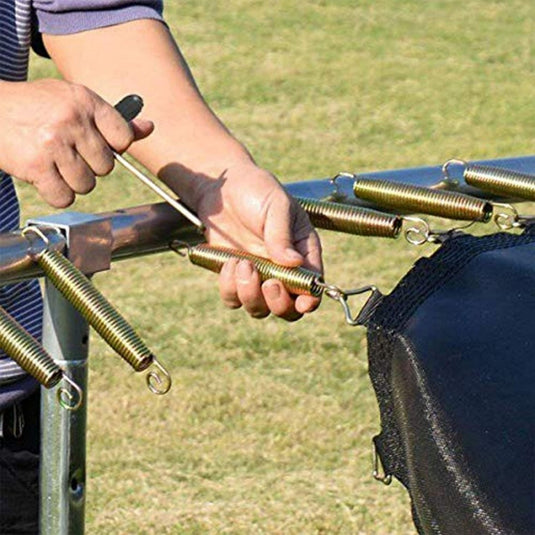
Conclusion: Why spring pullers are a reliable choice for trampoline safety
Spring pullers are a reliable choice for trampoline safety. They offer several advantages over tightening a trampoline's springs by hand.
First, spring pullers ensure that the springs are always properly tensioned. This is important for trampoline safety because properly tensioned springs make the trampoline more stable and reduce the risk of accidents.
Second, spring pullers are easy to use. Manual spring pullers can be difficult to operate, but automatic and hydraulic spring pullers are much easier to use.
Third, spring pullers are durable. They're made from high-quality materials and can last for years.
Fourth, spring pullers can extend a trampoline's lifespan. They help prevent the springs from wearing out or getting damaged too quickly.
Fifth, spring pullers are a good investment. They offer several benefits for a trampoline's safety, ease of use, and durability.
Need trampoline supplies?
Explore our trampoline collection and get 15% off with code TRAMPOLINE15!
Shop now for the best trampolines and accessories for your enjoyment!
Based on these benefits, it's clear why spring pullers are a reliable choice for trampoline safety. They offer several advantages over tightening a trampoline's springs by hand and can help keep the trampoline safe and reliable.
Here are some recommendations for trampoline owners considering buying spring pullers:
- Read the manufacturer's instructions carefully before installing or using spring pullers.
- Buy spring pullers that are suitable for the size and type of trampoline you have.
- Keep the spring pullers well maintained to ensure they work properly.
By following these recommendations, you can ensure that you use spring pullers safely and effectively.