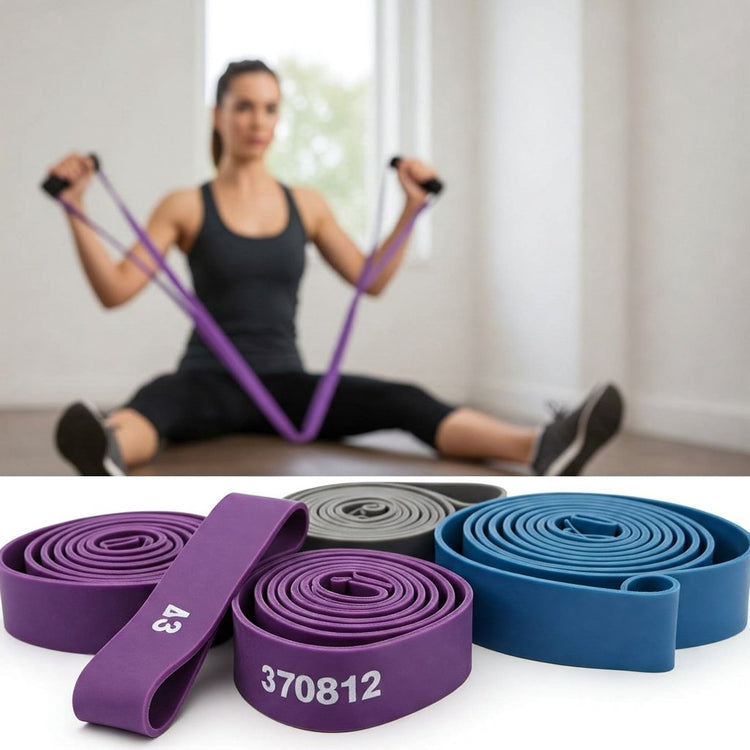
Everything you need to know about resistance bands: The ultimate guide to an effective full-body workout!
Resistance bands are a popular and versatile way to work out at home or on the go. They are small, lightweight, and easy to carry, making them ideal for people who travel or have a busy lifestyle.
There are various types of resistance bands on the market, such as rubber bands, elastic bands, and resistance cords. Rubber bands are usually the cheapest option and offer a wide range of resistance levels. Elastic bands are usually more expensive, but offer greater resistance and are better suited to strength and weight training. Resistance cords are usually the most expensive option, but provide the most resistance and are perfect for advanced athletes.
Resistance bands can be used for many exercises, such as squats, rows, chest presses, pull-ups, and leg curls. They are also suitable for training specific muscle groups, such as the chest, back, shoulders, legs, and arms.
One advantage of using resistance bands is that they provide constant resistance, unlike weights, where resistance decreases as the movement is performed. This means the muscles remain under constant tension, making them more efficiently trained.
Resistance bands are also safe to use and have less impact on the joints than weightlifting. This makes them suitable for people with joint problems or injuries.
In general, resistance bands are an excellent choice for those looking for a flexible, versatile, and efficient way to work out at home or on the go. They are a great addition to any training program and help strengthen muscles and improve fitness.